
Freeze Protection & Burst Pipe Repair
Our pipes fail in freezes because our climate almost never demands otherwise. Attics, exterior walls, and hose bibs are where it shows.
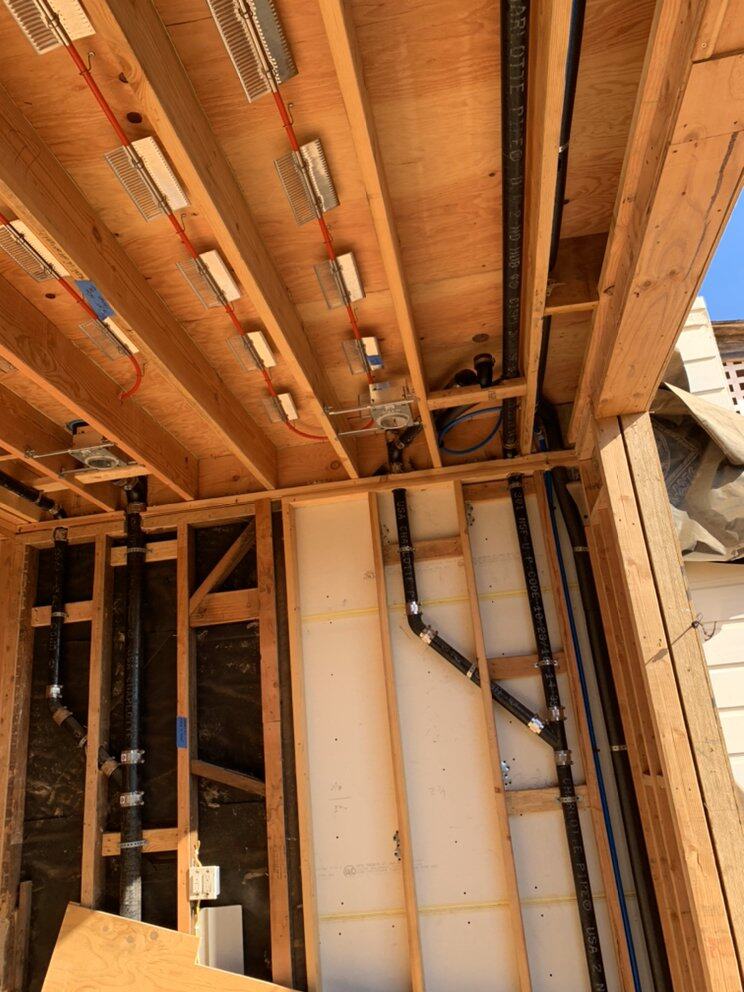
In colder regions, water lines are routed and insulated with freezing in mind as a matter of course. Here, plenty of supply piping runs through unconditioned attics and along exterior walls, which is perfectly reasonable for our normal weather and a genuine liability during a hard freeze. The failure usually isn't the freeze itself — it's the thaw, when the ice releases and the split pipe starts flowing.
There are two halves to this. Before a freeze: insulating vulnerable runs, protecting hose bibs and exposed lines, and knowing where your main shutoff is and that it actually turns. After a freeze: finding and repairing what split, which is often several places at once. We do both, and we'll be straight that during a regional freeze event every plumber in the city is overwhelmed and response times stretch — which is precisely the argument for the preparation half.
When this is likely your problem
What's included — and what isn't
Included in the quote
- Assessment of which lines are genuinely vulnerable on your property
- Insulation of accessible exposed supply lines
- Hose bib protection and exterior line covering
- Locating and testing your main shutoff valve
- Repair of accessible burst or split sections after a freeze
Quoted separately
- Heat tape or heat cable and its electrical connection
- Opening walls or ceilings to reach a concealed burst line
- Water damage restoration, drying, and mold remediation
- Attic insulation work beyond the pipe runs themselves
- Rerouting lines out of an unconditioned space, which is a larger repipe scope
- Guaranteed response times during a regional freeze event
How this job is priced
Preventive work is quoted from a walkthrough — how much accessible vulnerable pipe you actually have drives it. Post-freeze repairs are quoted once we've found the splits, and we'll be honest that finding all of them sometimes takes more than one pass, because a second leak can hide behind the first until the first is fixed.
Related services
What the visit involves
Walk the vulnerable runs
Attic, crawlspace, exterior walls, hose bibs. Not every pipe needs protecting; we'll say which do.
Protect what's exposed
Insulation on accessible runs and covers on hose bibs, done before the forecast, not during.
Find your shutoff
We locate it, test that it closes, and make sure you know where it is. This matters more than people expect.
Repair after a thaw
Splits get located and repaired, with a pressure test to catch a second leak hiding behind the first.
Questions about freeze protection & burst pipe repair
Should I drip my faucets during a freeze?
It's widely recommended and it does help, because moving water is harder to freeze and a dripping faucet relieves the pressure that actually splits pipes. It's not a guarantee for a line running through a cold attic, and it doesn't replace insulating what's exposed. Also make sure you know where your shutoff is before you need it.
How do I know if a pipe has already burst?
Often you don't until it thaws. The common sequence is no water at a fixture during the freeze, then water appearing once things warm up. If you have no water somewhere and temperatures are rising, that's the moment to locate your shutoff rather than wait and see.
Can you come out during a big freeze?
We take calls, but we'll be honest with you: during a regional freeze event demand exceeds every plumber in the city and we can't promise a response window. That's not a sales line, it's what happened here in recent years. It's the strongest argument we have for doing the preventive work while the weather is fine.
Is heat tape a good idea?
It can be effective on specific exposed runs, but it's an electrical product with real installation requirements and it needs to be the right type for the application. We don't install it, and the electrical side isn't our scope. For most homes here, insulating accessible lines and protecting hose bibs addresses the majority of the risk.
Ready to get this sorted?
Call and describe the symptoms. You'll get an honest read before anyone drives out.