
Water Pressure Regulator (PRV) Service
High water pressure feels great in the shower and quietly shortens the life of everything it touches.
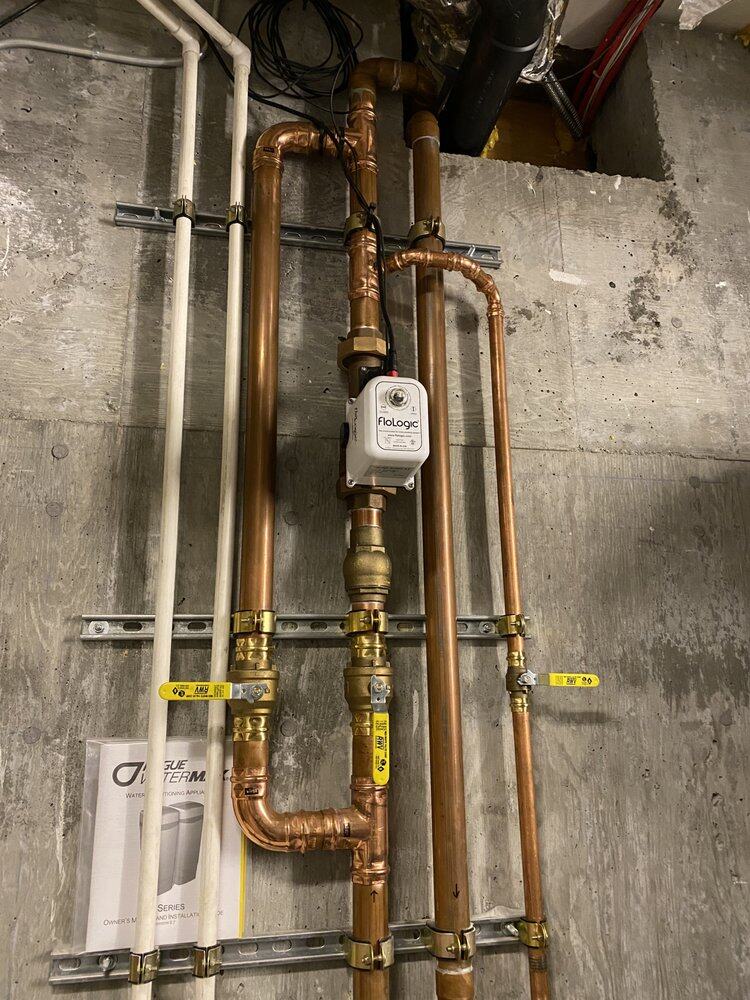
A pressure reducing valve sits near where water enters the house and steps municipal supply pressure down to something residential plumbing is built for. When it fails, it usually fails in one of two directions: stuck open, letting full street pressure through, or stuck down, leaving you with weak flow everywhere.
The high-pressure version is the sneaky one. Nothing obviously breaks — but supply lines, fill valves, water heater relief valves, and appliance hoses all live shorter lives, and you experience it as an unlucky run of unrelated failures rather than one root cause. Testing pressure takes a gauge and about a minute, which is why we test it on almost every call where the symptoms fit.
When this is likely your problem
What's included — and what isn't
Included in the quote
- Static pressure test at an accessible hose bib or fixture
- Inspection of the existing regulator's condition and setting
- Adjustment of a serviceable regulator to an appropriate pressure
- Replacement of a failed regulator
- Re-test after the work to confirm the pressure holds
Quoted separately
- The replacement regulator itself
- Thermal expansion tank installation, if adding a regulator creates a closed system requiring one
- Repair of fixtures, supply lines, or appliances already damaged by high pressure
- Excavation, where the regulator sits in a buried box needing to be dug out
- Interior repiping, if low pressure turns out to be corroded pipe rather than the regulator
- Permits where local code requires one
How this job is priced
Testing pressure is quick and we'll usually do it as part of whatever visit brought us out. Adjustment is minor. Replacement is quoted flat once we've seen where the regulator sits and what condition it's in — one in an accessible box is a different job from one buried behind landscaping. If a replacement creates a closed system, we'll raise the expansion tank question before the work rather than after.
Related services
What the visit involves
Put a gauge on it
One minute with a pressure gauge answers the question that guessing never will.
Check the regulator itself
Some are adjustable and serviceable; some have failed internally and won't hold a setting.
Adjust or replace
Set to an appropriate pressure for residential plumbing, or swapped if it can't hold.
Re-test and watch it
We confirm the new pressure holds under both static and running conditions.
Questions about water pressure regulator (prv) service
What water pressure should a house actually run at?
Residential plumbing is generally designed for a moderate range well below typical street pressure, and plumbing codes set a ceiling above which a regulator is required. Rather than quoting you a number here that may not match your local code, we'll test yours, tell you where it sits, and tell you what your jurisdiction requires.
Can high pressure really damage things?
Yes, and mostly invisibly. It stresses supply lines, fill valves, appliance hoses, and water heater components continuously. The tell is a run of unrelated small failures over a year or two. It's also why a water heater relief valve that keeps discharging is worth a pressure test before anyone replaces the valve.
Why did my pressure drop suddenly?
Could be the regulator failing closed, a partially shut valve, a clogged aerator or cartridge if it's just one fixture, or a supply line problem if it's the whole house. Whole-house versus single-fixture is the first thing to establish, and it's something you can check before calling.
Do I need an expansion tank?
If your system is closed — commonly because a regulator or check valve prevents water flowing back into the main — heated water has nowhere to expand and pressure spikes each heating cycle. In that situation an expansion tank isn't optional in most codes. We'll tell you whether installing a regulator puts you in that category.
Ready to get this sorted?
Call and describe the symptoms. You'll get an honest read before anyone drives out.